Introduction :
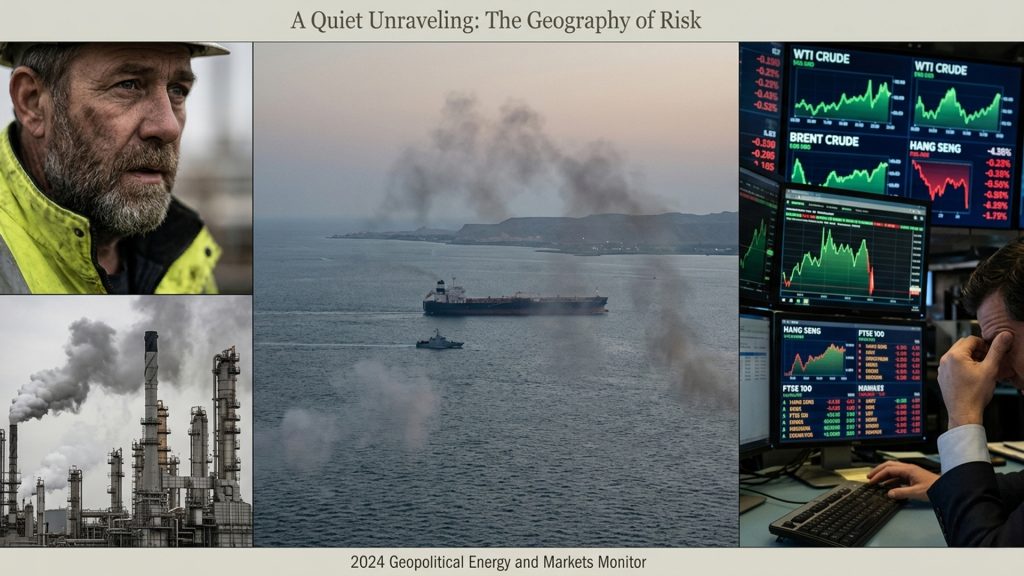
For weeks, the world appeared consumed by the escalating tensions between Iran, Israel, and the growing involvement of the United States. Global news cycles revolved around missile strikes, retaliation threats, oil market instability, and fears of a wider regional conflict. Every development dominated headlines, social media platforms, and political debates.
Then, almost suddenly, the conversation disappeared.
The headlines faded. Public attention shifted. The urgency dissolved into silence.
But the consequences never ended.
What vanished was not the impact of the conflict, but the visibility of it. Inflation continued rising across multiple economies. Energy markets remained unstable. Civilian suffering persisted. Political tensions remained unresolved. Yet the world gradually stopped discussing the crisis as if silence itself had become evidence of stability.
This reflects a larger reality about modern conflict in the digital age: wars no longer need to end in order to be forgotten.
The Modern News Cycle Rewards Attention, Not Resolution
Today’s information ecosystem operates at extraordinary speed. News is consumed through algorithms, viral clips, trending topics, and short emotional bursts. In this environment, visibility is often determined less by importance and more by engagement.
Conflicts receive maximum coverage during escalation:
- missile strikes,
- explosions,
- emergency statements,
- and dramatic visuals.
But long-term suffering rarely sustains the same level of public attention.
The aftermath of war are economic decline, displacement, trauma, and inflation that unfolds slowly and quietly. It lacks the immediacy that modern media systems prioritize. As newer global events emerge, older crises become background noise, even when millions of people are still living through their consequences.
This pattern is not unique. Similar cycles occurred during the Syrian Civil War, the Yemen Civil War, and the War in Afghanistan. Initial violence dominated international attention, while the long-term humanitarian consequences gradually became normalized.
The Economic Shock Did Not End With the Headlines
One of the most immediate effects of the Iran–Israel escalation was economic instability.
The Middle East remains central to global energy infrastructure, particularly through the Strait of Hormuz, a strategic route responsible for a significant share of global oil transportation. Even the possibility of disruption in the region triggered market anxiety, increased shipping risks, and drove fluctuations in oil prices.
The result was felt far beyond the battlefield.
Fuel prices rose. Transportation became more expensive. Supply chains faced renewed pressure. Import-dependent economies experienced another wave of inflation that directly affected ordinary households.
And unlike headlines, inflation does not disappear overnight.
Businesses rarely reverse price increases at the same speed they implement them. Higher logistics costs, insurance risks, and economic uncertainty continue affecting markets long after media coverage declines. For millions of families, the war survived not through television broadcasts, but through grocery bills, electricity costs, and shrinking purchasing power.
The conflict may have appeared distant geographically, but economically, its effects reached homes across the world.
The Human Cost Became Invisible
Modern wars are often remembered through moments of destruction rather than the long-term realities they create.
The immediate violence receives attention:
- destroyed buildings,
- emergency footage,
- casualty figures,
- and political statements.
But the deeper humanitarian consequences continue quietly after public interest fades.
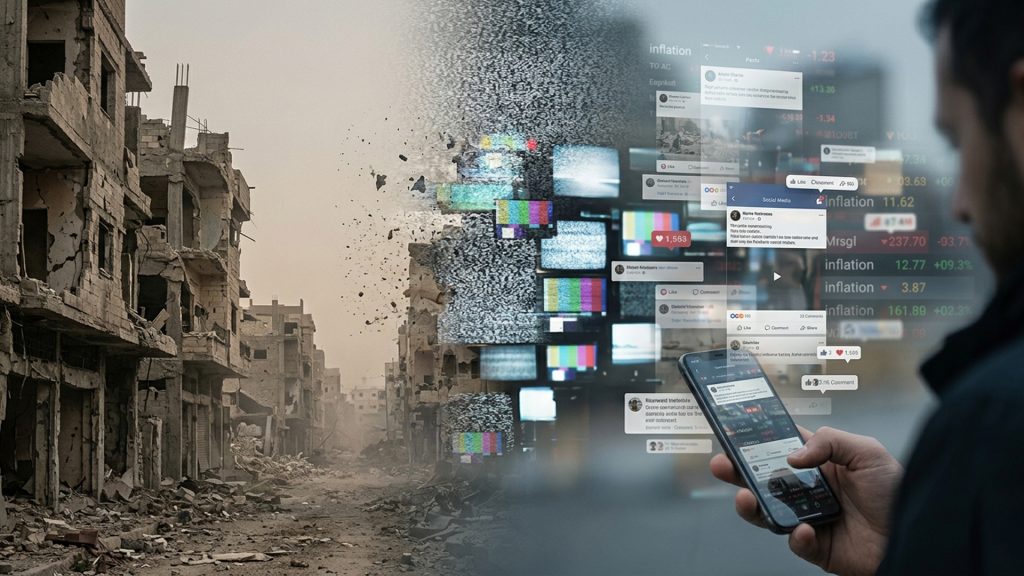
Families displaced by conflict remain trapped in uncertainty. Children grow up under psychological trauma. Healthcare systems weaken. Education is interrupted. Entire communities inherit instability that can last for decades.
As coverage declines, suffering becomes statistical instead of personal.
This transformation may be one of the most dangerous effects of modern media culture. Human tragedy increasingly becomes temporary content rather than sustained global concern. The public remembers the explosion, but forgets the years of recovery that follow it.
Why the Silence Matters
The disappearance of attention does not mean the disappearance of consequences.
In many ways, silence can be more dangerous than escalation because it creates the illusion that stability has returned when structural problems remain unresolved. Political tensions between regional powers continue. Economic pressure remains active. Public distrust deepens. Global polarization expands quietly beneath the surface.
At the same time, audiences themselves are becoming emotionally exhausted. Constant exposure to crisis after crisis has created a form of collective desensitization. People continue scrolling while wars, inflation, and humanitarian disasters slowly become normalized parts of everyday life.
This is the defining paradox of the modern era:
the world has never been more informed, yet long-term suffering has never been easier to ignore.
Points to End On.
The Iran–Israel–US conflict did not disappear.
Its visibility did.
The inflation remained.
The instability remained.
The civilian suffering remained.
The geopolitical tensions remained.
What changed was the world’s attention span.
In the digital age, wars are increasingly measured by how long they trend rather than how deeply they reshape societies. But history is rarely defined by headlines alone. It is defined by the long aftershocks that continue long after cameras turn away.
And perhaps that is the real lesson of modern conflict:
silence should never automatically be mistaken for peace.
Why Is No One Talking About
Introduction : For weeks, the world appeared consumed by the...
Read MorePutin’s Two-Day Visit to China: A
A Timed Diplomatic Visit : Russian President Vladimir Putin arrived...
Read More“Pakistan at a Crossroads”
A 7C Report Series: Pakistan is standing in a strange...
Read MoreSaudi Arabia’s PIF Set to Unveil
Introduction: Saudi Arabia’s Public Investment Fund (PIF), one of the...
Read More