“Pakistan at a Crossroads”

A 7C Report Series:

Pakistan is standing in a strange place right now. The country has one of the youngest populations in the world, millions of talented people, massive digital growth, and endless potential. Yet at the same time, frustration, uncertainty, and distrust are growing fast. From inflation and unemployment to climate disasters and political exhaustion, many Pakistanis feel like they are living through constant instability without clear direction.

This series is not about politics or empty slogans. It is about reality. The kind people quietly discuss with friends late at night, post about online without saying directly, or feel every time they think about their future. It looks at Pakistan through the eyes of ordinary people especially the youth and tries to document what the country feels like at this moment in time.

Over the next few articles, we will talk about why Gen Z feels disconnected from the system, whether Pakistan is wasting the potential of its youth, why the economy feels stuck in survival mode, and how climate change is already affecting everyday life across the country. This series is not meant to sound academic or robotic. It is written like an observation of modern Pakistan honest, grounded, and close to the emotions people are already carrying silently.

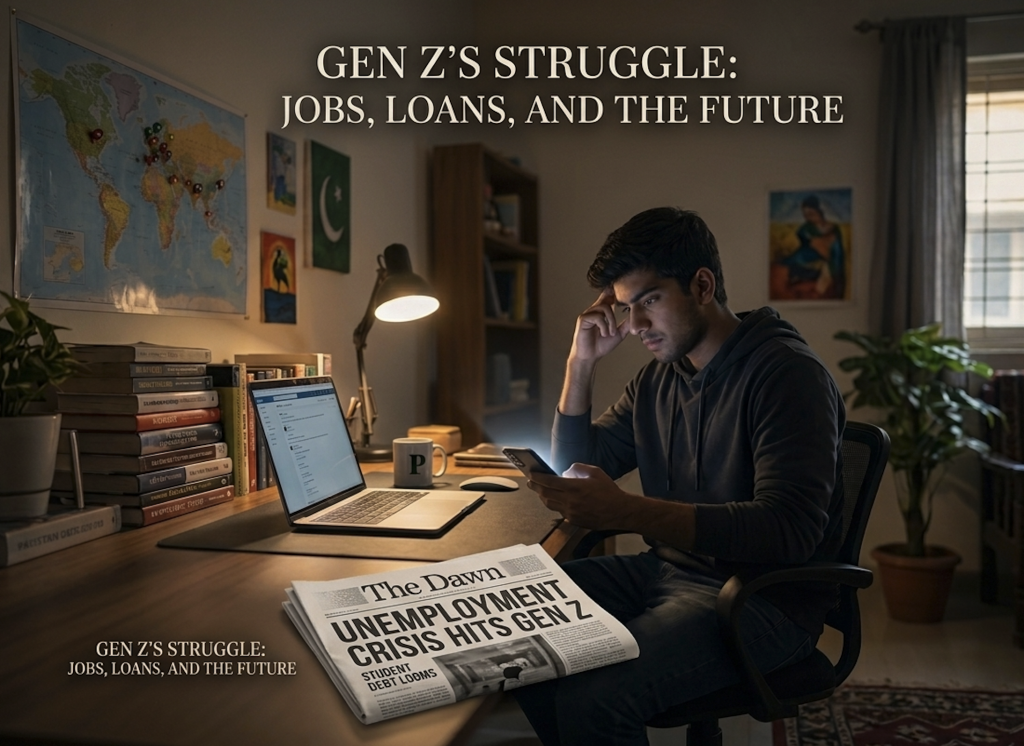
1: Why Gen Z in Pakistan Feels Disconnected From the System

Pakistan’s Gen Z is shaped by instability rather than stability. Many grew up during overlapping crises security challenges, political polarization, inflation cycles, and rising digital exposure. Unlike earlier generations, they are not limited to local comparisons. Through social media, they constantly see global lifestyles, education systems, and career paths in real time. That exposure has raised expectations sharply, but local realities have not evolved at the same pace, creating a widening perception gap between “what is possible” and “what is accessible.”

A central factor behind this disconnect is economic uncertainty. For many young Pakistanis, education does not reliably translate into employment or upward mobility. Degree holders often enter competitive job markets with limited openings, low entry salaries, or roles unrelated to their qualifications. This weak link between education and economic stability reduces trust in traditional pathways and institutions. Over time, politics also becomes emotionally draining, as public discourse cycles through crisis, blame, and short-term fixes rather than long-term solutions.

Beyond systems and economics, there is a deeper psychological layer. This generation is managing identity pressure, financial anxiety, and constant digital comparison simultaneously. Traditional expectations from family structures often clash with modern aspirations shaped online. The result is not disengagement from the country, but a growing emotional distance from the belief that the system can reliably support their ambitions. The frustration is rooted less in apathy and more in unmet expectation.

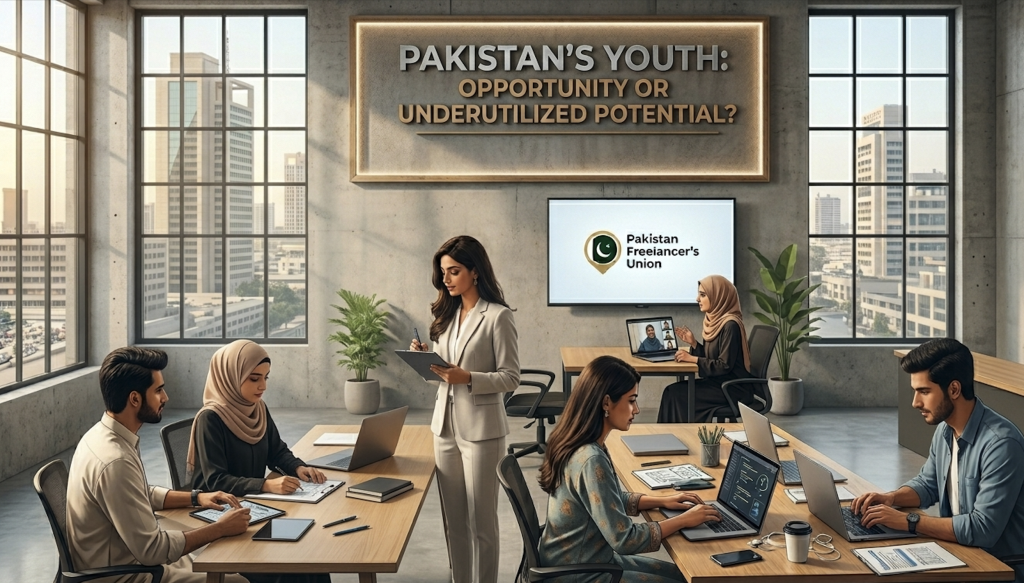
2. Pakistan’s Youth: Opportunity or Underutilized Potential?

Pakistan has one of the youngest populations globally, a demographic structure that is typically considered an economic advantage. In theory, a large youth population should translate into innovation, productivity, and entrepreneurship. In practice, however, this potential remains unevenly utilized. Despite limited infrastructure and institutional constraints, Pakistani youth are already active in freelancing, digital content creation, tech development, and small-scale entrepreneurship, often building opportunities independently of formal systems.

The core challenge lies in absorption capacity. Each year, large numbers of graduates enter the workforce, but the formal economy struggles to integrate them effectively. This mismatch between education output and job market demand pushes many toward underemployment or career shifts unrelated to their studies. As a result, long-term career planning becomes uncertain, and migration or remote international work increasingly appears as a more stable alternative.

At the same time, the opportunity landscape is not closed, it is underdeveloped. Women, rural youth, and students from smaller cities remain significantly underrepresented in formal economic participation. However, digital access is gradually reshaping this dynamic by lowering entry barriers. If structural investment in skills development, digital infrastructure, and entrepreneurship ecosystems accelerates, Pakistan’s youth population could shift from being a pressure point to a major economic driver. Without that shift, however, the country risks continuing to export its talent rather than utilize it domestically.
3: The Economic Reset Pakistan Desperately Needs

Pakistan’s economy is increasingly experienced not as cyclical instability, but as continuous financial pressure. Inflation has fundamentally altered everyday life, affecting food, fuel, housing, education, and healthcare simultaneously. For many households, economic planning has shifted from long-term goals to short-term survival strategies. The traditional idea of upward mobility through steady income has weakened under sustained cost-of-living pressures.

Structurally, the economy continues to face recurring challenges: narrow export bases, reliance on imports, inconsistent fiscal policies, and periodic dependence on external financial assistance. These factors create short-term stabilization but prevent long-term confidence building. At the same time, public trust is weakened when taxation and economic burden are perceived as uneven or poorly distributed, deepening the gap between citizens and institutions.

Despite these pressures, Pakistan retains significant economic potential. Its youth population, expanding digital economy, and strategic geographic position offer strong foundations for growth. However, unlocking this potential requires a shift from reactive management to sustained reform particularly in exports, industrial productivity, education alignment, and policy consistency. Without structural change, economic instability risks becoming normalized, making recovery progressively more difficult over time.

4. Pakistan’s Climate Crisis Is Already Here

Climate change in Pakistan is no longer a projected risk. It is an ongoing reality. The country has experienced increasing frequency and intensity of floods, heatwaves, water shortages, and urban pollution over recent years. These events are no longer isolated environmental incidents; they are now directly impacting health systems, food production, infrastructure, and economic stability across multiple regions.

Although Pakistan contributes a relatively small share to global greenhouse gas emissions, it remains among the most climate-vulnerable countries in the world. The impact of large-scale flooding in recent years demonstrated how quickly entire communities can be displaced and economic activity disrupted. Similarly, rising temperatures are disproportionately affecting outdoor workers and low-income populations, while water stress is slowly intensifying pressure on agriculture and urban supply systems.

The central challenge is not awareness, but preparedness. Policy response remains largely reactive, with limited long-term adaptation planning in many urban and rural areas. However, public awareness  especially among younger populations is increasing rapidly. The key question now is whether infrastructure, governance, and environmental planning can evolve fast enough to match the accelerating pace of climate stress. Without that shift, climate shocks will continue moving from episodic disasters to structural national challenges.

Leave a Reply

Your email address will not be published. Required fields are marked *